
In microbiology and analytical laboratories, effective labware cleaning is essential to prevent cross-contamination and ensure experimental accuracy. Autoclaves and laboratory washers play complementary roles in this process. While washers remove physical residues such as media, chemicals, and biological debris through mechanical and chemical action, autoclaves provide high-temperature steam sterilization to eliminate microorganisms. Together, these systems establish a validated cleaning and sterilization workflow that supports reliable and reproducible laboratory results.
The Importance of Autoclaves and Washers
The cleanliness and sterilization of laboratory equipment are critical to experimental outcomes. Inadequately cleaned or sterilized glassware can harbor microorganisms during use and may even produce harmful substances. In clinical laboratories, contamination can lead to erroneous test results, thereby jeopardizing patient treatment plans or diagnoses.
To ensure processes meet aseptic standards and prevent cross-contamination, laboratory sterilizers and bottle washers play a pivotal role in laboratory quality control systems.
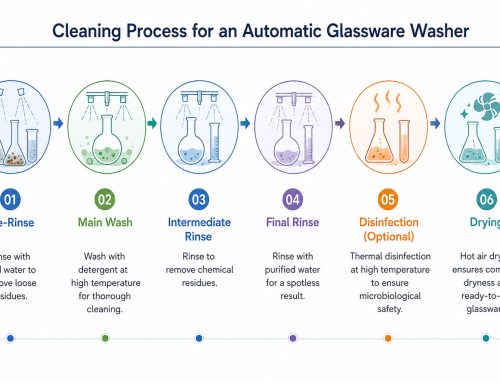
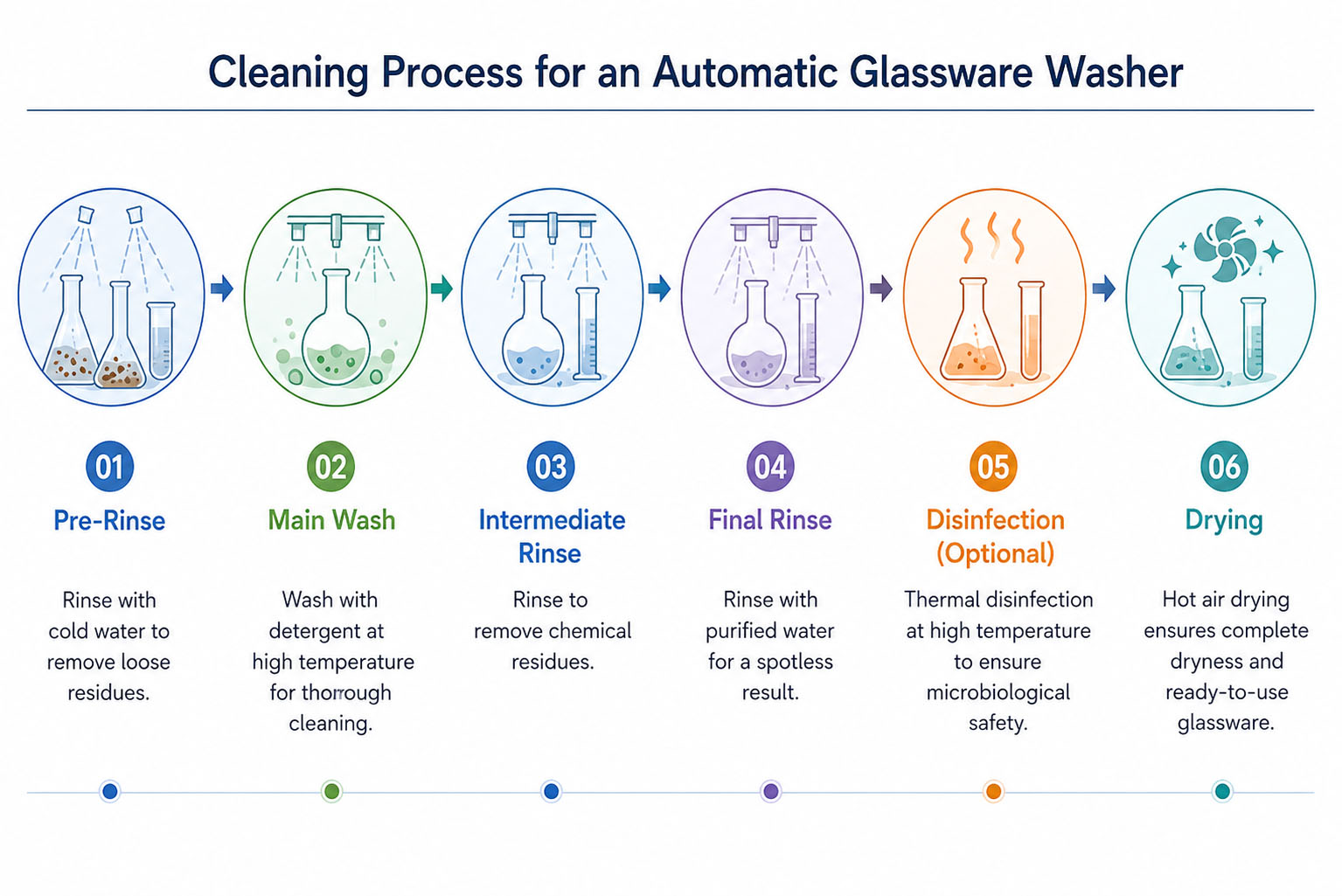
Many professional laboratories install dedicated washing systems to guarantee thorough cleaning. Conical flasks, graduated cylinders, and numerous other laboratory vessels feature varied shapes. The specialized spray systems and custom rack configurations of laboratory washers ensure comprehensive, high-pressure, multi-angle cleaning for vessels of diverse structures.
Laboratory washers feature higher heating capabilities (180ºF to 200ºF), delivering superior disinfection results. Consequently, laboratory washers are an ideal choice for reducing consumable expenses and ensuring clean supplies for subsequent use.
The Importance of Autoclaves
Autoclaves are among the most critical sterile control devices in laboratories. By utilizing high-temperature, high-pressure saturated steam, they ensure a sterile environment capable of thoroughly eliminating bacteria, fungi, viruses, and spores. This guarantees experimental materials and equipment remain sterile, prevents cross-contamination, and effectively sterilizes various laboratory and clinical instruments.
Microbiological experiments are highly sensitive to contamination. Inadequate sterilization of instruments or culture media can lead to skewed results or even experimental failure. Autoclaves form the fundamental safeguard for experimental accuracy and reproducibility. After handling pathogenic bacteria or biological samples, autoclaves can inactivate experimental waste, preventing pathogen spread and complying with biosafety protocols. In pharmaceutical, food testing, and research institutions, autoclaving is a basic requirement of quality management systems like GMP and GLP, serving as a critical component of laboratory compliance.



Get Social